Very good question, but my answer will probably be a disappointment. Sometimes the answer for an interesting question is actually quite mundane.
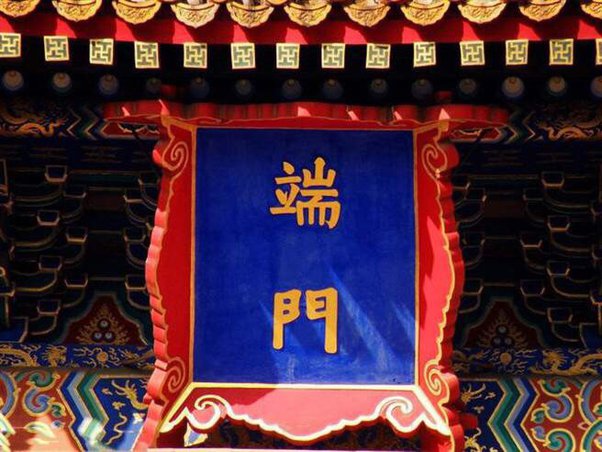
First, let’s take a look at these Inscribed Board found on the top side of doors in the Forbidden City
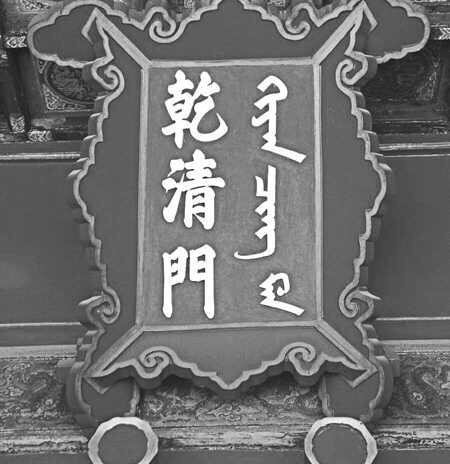
Notice the character 门/門 was written without a tick at the bottom right?
Next, take a look at the evolution of the 門 character:
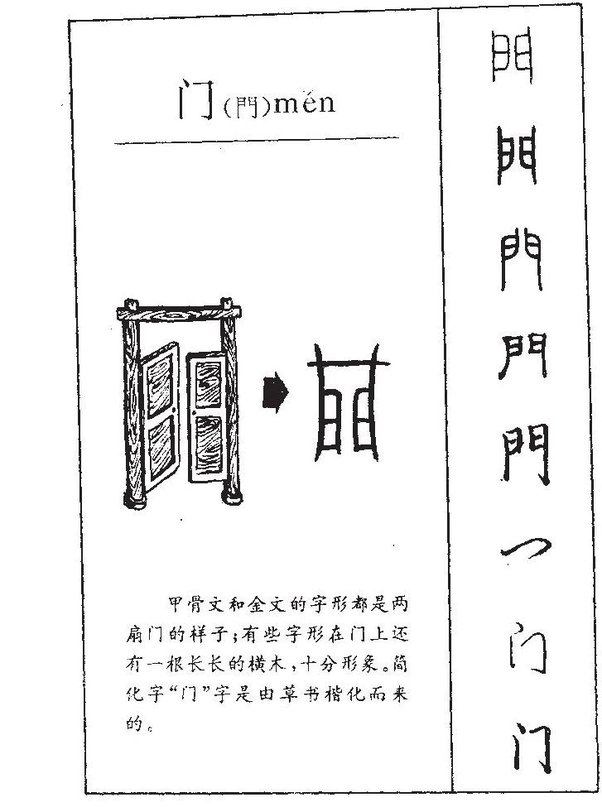
The addition of the tick at the bottom of the bottom right radical was at the later stage of the evolution of the character, probably around or before the Yuan Dynasty, not more than 800 years ago.
門 by itself is a pictograph character, meaning door. But it’s also used as a radical for other more complex pictographs, ideographs and determinative-phonetic characters like
開 – open
鬧 – noisy, joking, disturb
閉 – close
When the above characters are written, we always write the 門 radical first (start from left to write) before adding what ever is needed inside. In the days when people wrote with calligraphy brush and ink, it’s very natural and faster for people to finish writing the last part of 門 by dragging the brush inwards and continue with writing inside the 門. Hence, the writing of 門 ended with an inward “tail” on the right side.
This is why 門 with an inward “tail” at the bottom right became standard as everyone was doing it out of habit. But when the character was inscribed/engraved on an inscription board, the old writing without the right bottom “tail” was still being followed as less work was required. Hence, we have the 門 without the “tail” on the old Inscribed Board on top of the doorways at the Forbidden City.