When was simplified Chinese characters created?

First of all, be patient, and let’s clarify some THINGS. This will help us to understand why there are so many categories, names, or branches about Chinese characters ONLINE(or on Quora), making it seems like to understand Chinese characters is much more complicated than to achieve controlled nuclear fusion in engineering. #1. All the Chinese characters … Read more
How do Chinese people study?

I can’t give you a definitive description, but I can show you some pictures! The “Chinese way of studying” can be summed up by the slogan “只要学不死,就往死里学”, which roughly translates into “As long we don’t die from studying, we’ll study until we’re dead.” . Pictures of a typical Chinese classroom before Gaokao The holiday homework … Read more

Chinese language: Why does 東西 (dongxi) means “things” in Chinese?

The word “東西“ meaning ”things” came from “买東西“ which came from 买東又买西 which is preceded by 买了東又去西买 meaning after shopping from the east, go to the west to shop. Just like modern shopping mall designs with two anchor tenants (JCPenney and Macy) at each end, ancient Chinese shopping malls 街 are similarly designed. One in … Read more

Can you provide some examples of Chinese words that have different meanings when spoken with different tones?

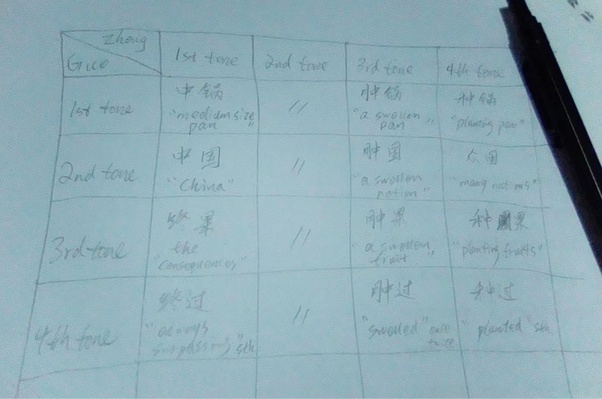
The word ”中国”. As you can see,the ”Zhong” with the first tone and the “Guo” with the second tone in Mandarin combined as a word of “中国” means “China”. If we say the words in different tones in Mandarin,it probably means: There are 3*4=12 possibilities, each of which contains multiple other possibilities represented by different … Read more

What is the meaning of Wang (王) in Chinese? Are there any other meanings beside “king” or “royal”?

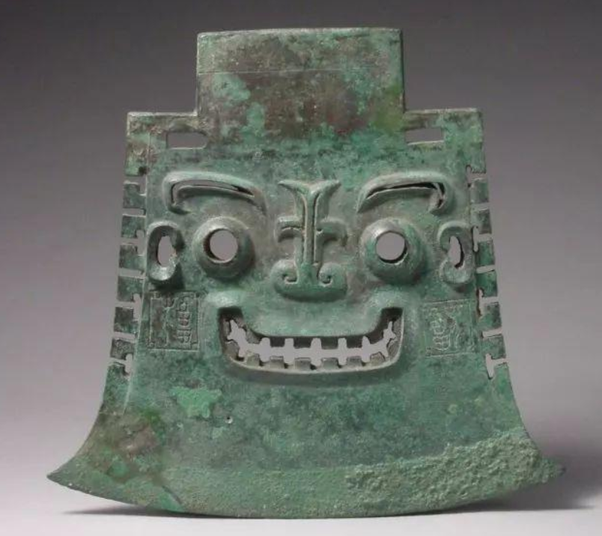
There is no doubt that the character “王” (Wang) originated from the pictograph of an axe. This is a large axe from the Shang Dynasty, and I even suspect that the middle part, resembling a human nose, is the origin of the character “王.” Here is the character “王” from the late Shang Dynasty inscriptions; … Read more