What makes some identical Chinese characters have at least 2 different pronunciations?

Originally all words had one pronunciation each (一個蘿蔔一個坑 each radish has its hole, couldn’t resist that), but as the language evolved, characters took on different pronunciations for the sake of clarity. Or perhaps we should say, since the written language follows the spoken language, as language evolved, people started pronouncing words a bit different for … Read more


What does 2333 mean in Chinese?

2333. You might think it’s a random number unless you’ve spent a good chunk of time chatting with Chinese netizens or wading through the comments on Weibo. Well, put simply, 2333 is the Chinese equivalent of typing ‘haha’ or ‘lol’. It’s internet speak for laughter. But why this particular number, you ask? It comes from the Chinese … Read more

How can mainland Chinese still recognize traditional Chinese characters?

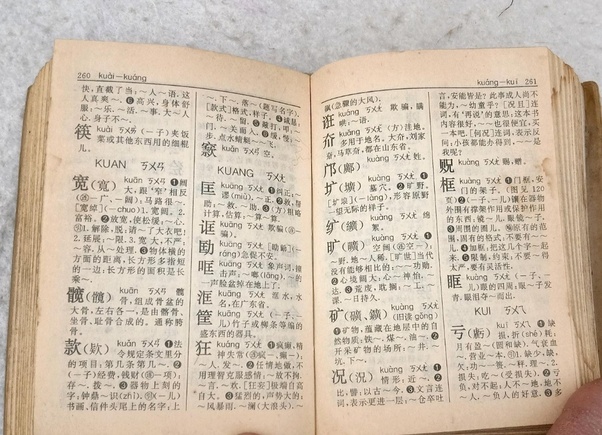
This is the Xinhua Dictionary of 1953, its main role was to promote national literacy,The traditional Chinese characters are in brackets. This is the Xinhua Dictionary of 2020, which is a literacy reference book for primary school students, still have traditional Chinese characters. You will find that only part of Chinese characters have different between … Read more

What is the derisive Chinese name for an outsider, a westerner, a European, an American, or a white person?

I believe the words you’re searching for are:   鬼佬, or gweilo. Otherwise known as “white devil” or “ghost.” 鬼子, gweizi. Mandarin slang. 海人, gaijin. It means “outsider,” “alien,” “sea dwelling human.” 老外, laowai . It means “old foreigner” literally. It is slang and loosely impolite. Bonus one, from the Chinese in Singapore and Malaysia: … Read more

If the Chinese language has around 6000 characters, how are they even able to write at all and memorize all of that?

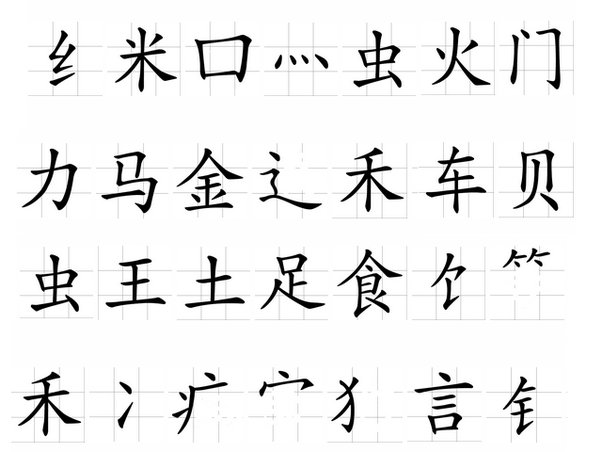
It doesn’t work that way. A chinese character is composed of radicals combined in a block. There are ~200 radicals in total. These are the analogue of alphabets in phonetic or spelled languages, except the radicals convey meaning, rather than sound. Many characters can be decomposed from their radicals to extract the meaning. For example, … Read more