Do the Chinese still make new characters today?

As far as I know, very few. But they do exist. For example, the character “砼” refers to concrete. It consists of the parts “人” (person), “工” (work), and “石” (stone), symbolizing “man-made stone.” Another example is “瓩,” which combines the number 千 (1000) and 瓦(watt), clearly meaning “kilowatt.” There’s also “猹,” a small animal … Read more

How does the Pinyin system in Chinese benefit from using a Latin-based alphabet?

In my opinion, it’s useless. Chinese is fundamentally not a phonetic language. What’s called “Hanyu Pinyin,” to me, is a scam. I see Chinese as a language of Yin and Yang, a language rooted in the Bagua (Eight Trigrams). Pronunciation can be understood as a combination of Yin and Yang, and then we have the four tones. In fact, the four … Read more

What are some of the easiest and hardest Chinese characters to write?

The easiest Chinese character would be numbers, one → “一“ two → “二” three → “三“ (No, four is not four straight lines.) the hardest Chinese character, I assume you mean the Chinese character with the most strokes. There’s some debate on that. So there are over 85 thousand Chinese characters. But you only need … Read more

In Mandarin, when is zero, one and two pronounced as “dòng”, “yaō”, “liǎng” instead of “yī”, “èr”, “sān”?

You kinda got it mixed up. “dòng”, “yaō”, “liǎng” mean 0, 1 and 2, however “yī”, “èr”, “sān” actually stands for 1, 2, and 3. “dòng”, “yaō”, “liǎng” are special pronunciation in Chinese systems such as the Chinese military, police, firefighting, railway, and aviation. They use the radio communication numeric pronunciation avoid confusion and improve clarity, … Read more

Are new Chinese characters still being invented?

Inventing new characters seems to have been still practiced quite commonly through the 20th century. For instance, the character “熵” means entropy, and was coined by a Chinese physicist Húgāngfù in 1923. In Japan, we simply use the transliteration “エントロピー(pronounced entoropi-)” for the word, but I think it’s way cooler to write with one character. … Read more

Why is the Chinese word for Rome 罗马 instead of 肉马?

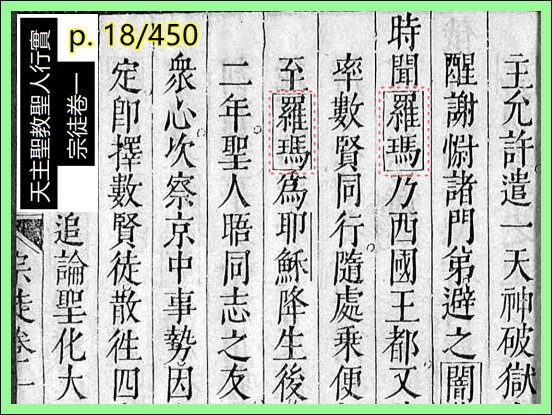
History* provides three reasons. Jesuit priests were the first to introduce the history of Rome and the Roman Catholic church to China, so the word 羅馬 (written 羅瑪) was probably introduced by Matteo Ricci and his Jesuit colleagues: Matteo Ricci – Wikipedia (1) Latin/Italian Pronunciation: Standard Mandarin’s r- and -ou sound quite different from the Italian or Latin forms of r- or -o (to put … Read more

How do Mandarin speakers express concepts like “one in a million” using “wan” (万), and what cultural meanings do these expressions carry?

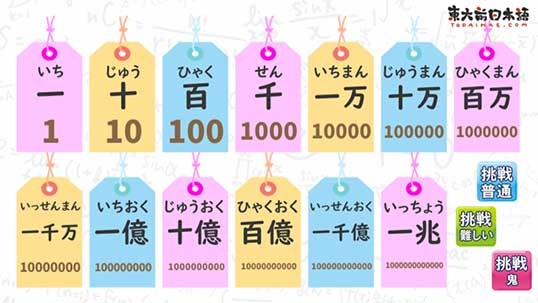
Chinese uses a decimal system. The image below is something I randomly found on Google, from a Japanese website, but that’s fine—it’s almost identical to Chinese. I’m directly referencing this image. However, there’s one difference: the character “兆” (zhào) in Chinese culture can mean 10^6, 10^12, or 10^16, depending on the context. In modern mainland … Read more

‌Why does the hanzi for “autumn” (秋) contain the radicals for “grain stalk” (禾) and “fire” (火)?

The first character for autumn represents a cricket, which was carved on the back armor of ancient turtles and the shoulder blades of cows for divination. The second one was written on bronze ware. The third one was written in a scroll made with silk production in the state of Chu. To the left of … Read more