Why is it common to ask “Have you eaten yet?” in China?

Very common, especially in Beijing Hu Tong (胡同, small alley) culture. Old Beijing (老北京) people ask “吃了吗” (have you eaten yet?) as we say “how are you”. It’s a common casual greeting between friends and neighbors. Food is one of the main theme for all Chinese, regardless rich or poor, regardless of their social status. … Read more

What is (yànyǔ) in Chinese?

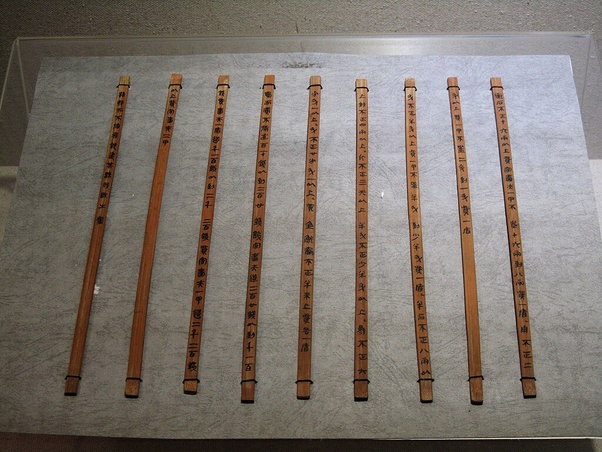
諺語 諺:(形声。从言, 彦声。本义:谚语) 同本义 [aphorism; proverb; saying; adage] 谚, 传言也。字亦作喭。——《说文》 There is 諺語,成語 and there is 箴言,these are all “sayings” but there are those which are 成語 which are “established“ 成 and there are those 成語 that are 箴 with a pair of watchful eyes above (or those written on 竹)。 What kind of sayings … Read more

What does this Chinese expression mean, “这是什么鬼”?

It means “What the hell is this?” “这是什么鬼” can be regarded as a short form of “这是什么鬼东西”. The “鬼”, literally means ghost or monster, is used to express one’s surprise on something seemingly unreasonable or embarrassing. “这是什么(东西)” means “What’s this (thing)”, so “这是什么鬼” means “What the hell is this”

What language was used in China during the Shang and Han dynasties?

When someone asks what language Chinese people speak? The locals will answer: I speak Beijing (Mandarin_Jurzhen) or Cantonese-Cantonese, Hakka (Hakka-He), Hokkien (Fujian)… Give them a newspaper, everyone can understand the content, but when read aloud, no one can understand each other. When talking to each other, no one can understand each other. But when given … Read more

Why did the Chinese never adopt word spacing?

Because there is no reason to. Believe it or not, youcanactuallyreadEnglishsentenceswithoutspacesaswell. Ittakessomepractice, butyoushouldbeabletoreadthesesentenceswithoutmuchfussatall. Spaces are not strictly necessary even for alphabet-based languages – for logographic characters that has their own meanings (instead of just representing sounds like alphabets), it’s definitely not needed. Native Chinese speakers definitely don’t have issues reading without spaces. If spaces were introduced, … Read more

What is the most difficult part of learning Mandarin Chinese as an adult beginner from scratch, and what can be done about it?

Coming from speaking English, it’s tough that there’s almost no vocabulary overlap. When I learned Spanish as a teenager, most of my vocabulary learning was via making connections to English words. “Bibliotecha” sounds like it has to do with books, so it’s easy to remember that it means library. I didn’t need to rote memorize much to … Read more