What is the meaning of “如何51吃瓜北京朝阳群众热心吃瓜”?

You might not have copied the sentence completely. “如何51吃瓜北京朝阳群众热心吃 瓜” Do not know what does that mean. But I’d like to explain a bit. “瓜” here represents “watermelon,”西瓜, literally meaning “western melon.” Clearly, this is not a native Chinese species; the character “西” (west) here signifies its Middle Eastern origin. For example, “胡” (barbarian) in … Read more

Why Chinese people dont use different kind of Chinese characters?

we have used “贾湖刻符” at 9000 years ago: we have used “双墩刻符” at 7000 years ago: we have used “半坡陶符” at 6000 years ago: we have used “骨刻文” at 2600.BC: we have used “甲骨文” at 1400.BC: we have used “金文” at 1300 BC: we have used “小篆” at 221.BC: we have used “楷书” at 202.BC … Read more

Do Chinese characters look like what they mean?

It depends on which font/script you’re looking at and what the original meaning is. 1# Let’s say nouns. There are many types of nouns, like nouns representing solid objects and nouns representing abstract concepts. For nouns representing solid objects. (a page of my kid’s Chinese book, first day in school) If you’re looking at a particular font/script, then … Read more

Why do people pronounce “那个” as “nei ge” instead of “na ge?”

The reason people pronounce “那个” as “nei ge” is similar to the reason why people pronounce “going to” as “gonna.” When words are spoken quickly, we tend to abbreviate. The spoken pronunciation of a language is often different from the “formal” written form. The full form of what people mean when they say “nei ge,” is … Read more

Did Classical Chinese (文言) have similar use of punctuation marks (标点符号) as modern Chinese?

No. Classical Chinese was not punctuated. The reader could add marks, called 讀 (pronounced tòu/do) and 句; 讀 was like a comma, 句 like a period. That’s the extent of it. So this sometimes brings different readings. A good example is from the Analects, 泰伯:子曰民可使由之不可使知之 If you punctuate it this way, it is the reason … Read more

What is the reason for the large number of characters in the Chinese language? Is there a way to simplify them without losing their meaning?

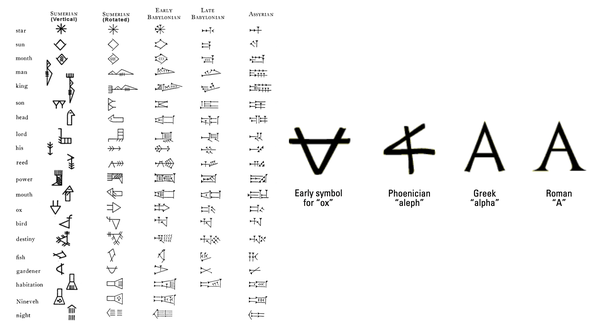
Like most other forms of written language, Chinese script started out as a pictographic script where the characters looked like what they represented. You can even see this in the modern Latin alphabet, which is simply a stylized version of the Phoenician alphabet where every character looked like something physical but came to represent not … Read more

My English name is Paris im a girl my Chinese name is 范逸瑶. Does it have a meaning, does it go with my name and is it pretty?

If what you wanted to ask is whether Paris Fan is a suitable name for your Chinese name 范逸瑶, which is spell as Fan Yiyao in Pinyin, then I suggest you replace Paris with Elaine, which sounds more similar with Yiyao. And in my humble opinion, Elaine could evoke a different vibe than Paris. After … Read more

Will 個/个 eventually replace the majority of measure words in Chinese?

As Xie Wei mentioned, the term “measure word” / 量词 is actually obscuring a bit of complexity here. The quick and dirty version is that there are 量词 that are “count-classifiers” — say something like 条 in 一条鱼 or 一条狗, 只 In 一只貓, 一只狗, etc., or whatever. These tell you what category of thing the … Read more