It’s true that the Mandarin language is very hard to learn. Do all Chinese people speak Mandarin perfectly?

It is extremely difficult, its not a matter of just what you put into it like with other languages. Somewhere, I read an article from a linguistics major student, saying how he felt that with the same time of 5 years, He compared his 5 years learning Arabic, French, and Chinese. He concluded that you’d … Read more

How can you easily remember the differences between the Chinese characters “未 (Wèi)” and “末 (Mò)” since they look so much alike?

My English teacher, was an American from Oregon, named Susan Grant. She was a retired lawyer who likes to hike. She taught me that when she was young she had mild dyslexia, she couldn’t tell if it is “deb” or “bed”. Her Elementary School English teacher said, imagine a bed. what it looks like, and … Read more

Why Chinese characters don’t look like what they mean?

Three thousand years ago, a lot of characters looked like what they mean, but over the course of three thousand years, some things are bound to change. In those days, most people lived their whole lives without seeing any writing; many of them probably didn’t even know writing existed, just as most people today probably … Read more

Why are there so many homophones in the Chinese language?

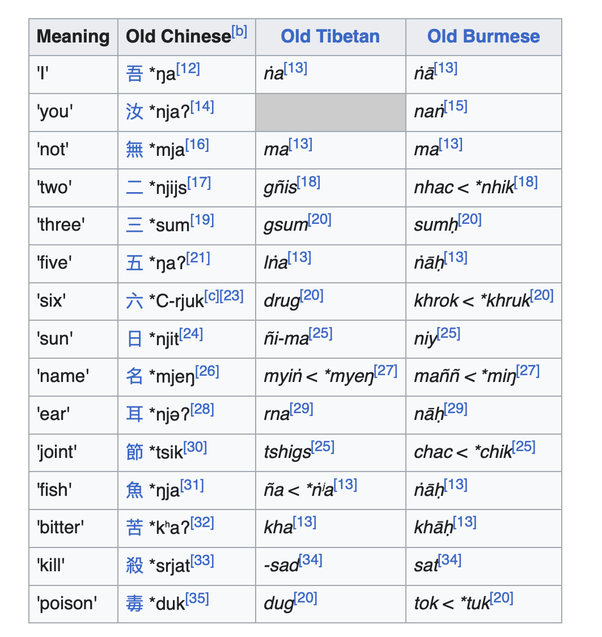
The reason is that sound changes reduces the complex consonant clusters of Old Chinese and deleted final consonants over time. Old Chinese typically had short monosyllabic words with coda consonants, much like most of the native Germanic vocabulary of English (e.g., words like pink, strike, screw, sleep, dream, wink, wing, back, bend, first, sixth). In most Chinese … Read more

What does 依老偕老 mean?

Actually I’ve never seen this phrase before, and a little googling gave no result either. I guess it’s a confusion of two unrelated phrase/idioms: 倚老卖老: Use your age and seniority as an advantage, for example, to treat young and junior people rudely. 执子之手,与子偕老: Hold your hands and get old together. Always used to describe the … Read more

How do Chinese people memorize thousands of Chinese characters?

That’s another ‘China Myth’, right? But the truth is: a Chinese character is not an English/Latin letter, but it is a word, or even a phrase. If you could recognize 1500 Chinese characters you can use Weibo/WeChat and you can read most of the daily use information printed in Chinese language. If you learn 3500 … Read more

Why does the Chinese character for black, 黑 have a fire radical in it?

Because it is a fire related one, in China, this explanation is widely accepted. And if you search it on Google, you’ll likely find that it is associated with “the colour produced by fire”, “chimney”, etc. However, there are indeed other theories. For example, in one of the answers to this question, a gentleman provided … Read more

Do Chinese people’s names really have a meaning?

Okay, here’s the thing: Every Chinese name, when translated literally into English, often has a meaning similar to the style of names in World of Warcraft, like Hellscream, Bloodhoof, Windseeker, Grimtotem, Stormrage, Whisperwind, or Deathwing. Some of the “Chinese names” you hear get translated into English as “Lillian,” “Vivian,” “Jack,” “Robin,” “Leo,” “Lucy,” “Matthew,” and even “Sunshine/Sunny.” … Read more