I was adopted from an orphanage in China and am curious if the name they gave me (益瑞萍 – yi ruiping) means anything.

益 is your last name. It is an extremely rare last name, so I think you might be mistaken. It might be either 易 or 伊, both are more common last names with the same pronunciation (different tone). 瑞 means Lucky, fortunate. 萍 is a type of water grass. It doesn’t have a root and … Read more

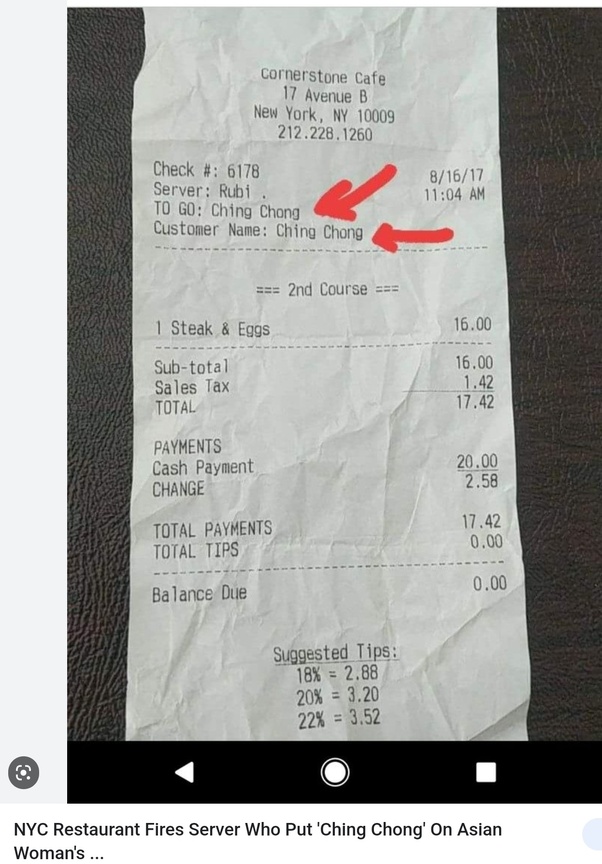
Although ‘ching chong’ is a common pejorative term, does it actually mean anything in Chinese Mandarin or Cantonese?

Pure ignorance by those who abuses position of power. A mimickery of another culture. Very childish, juvenile and idiotic. Very offensive. Even if an innocuous version of the phrase exists, it does not whitewash the intent of those who utter it out of ill-intent. So, aside from curiosity, it’s poor taste. It can come in … Read more

Why isn’t Pinyin designed according to the pronunciation system of the English language instead of spelling K sounds as Q, ch sounds as x, t sounds as c and so on?

I don’t quite understand your question. First, let me explain my viewpoint: English is my native language, Mandarin has been my first language for most of my life. Here is what I know of pinyin. K sounds, such as in the English word kick, are spelled with K: 口扣寬 kou, kou, kuan, and so forth. Q … Read more

Does Cantonese sound like Vietnamese?

I speak Cantonese, Vietnamese, and Mandarin. I also did research in this matter and I will share with you some facts. Cantonese is considered an older dialect in Chinese branch, and Vietnamese have many Chinese loanwords, aka ‘Han Nom’. Those Chinese loanwords are somewhat pronounced exactly the same as Cantonese. Eg: 人 is ‘nhân’ (in … Read more

What does 沉鱼落雁 mean?

Chen Yu Luo Yan (沉鱼落雁) is a famous Chinese idiom. 沉鱼落雁 (chén yú luò yàn): Makes the fish sink and wild geese fall The idiom describes the magical beauty of women. In particular, the idiom is related to Xi Shi (西施), and Wang Zhaojun (王昭君), two of The Four Beauties of ancient China (四大美女). Chen … Read more