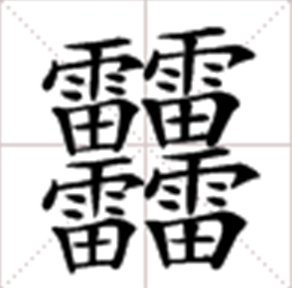
薯 is a Chinese character related to ancient Egyptian hieroglyphs. Can you find the connection?

薯 is a Chinese character that appeared some time around the 6th century CE. By that time, the Roman emperor Theodosius I had closed all non-Christian temples, so the last known Egyptian hieroglyphs were written some time around 400 ce. There is almost no overlap. In Chinese, 薯 was originally written 藷;薯 is a corrupt … Read more

What are some Chinese characters that an English speaker might find humorous if explained to them?

How about this character? It looks like a face that is sad, tired, shocked, or embarrassed. In fact, it is used on chats and forums online to show those exact emotions. The character is pronounced jiǒng (ㄐㄩㄥˇ) and originally means “window,” but it also adopted the meaning of “bright.” I think it’s pretty funny, don’t … Read more

Why do some in China call the foreigners especially the westerners “Yang Daren” (洋大人)?

Before I explain, I would like to correct some other answers. This is rather new an expression and used very much in China, especially by the younger but not the elderly. It is a usage of sarcasm. 洋 means “foreign”/ “from foreign countries”. 洋葱、洋车、西洋、东洋 are some great examples where it is used in this meaning. … Read more

I heard some people say Chinese character was invented originally by Koreans. Is it true?

Oh yes, the Koreans invented everything, including the Tamil language. Koreans even rode dinosaurs. They were the very first Chinese, and lived in China, just to confuse people. I know there are some supernationalistic Koreans who make up all sorts of ridiculous claims, and suspect that most Koreans are embarrassed by all that malarkey. If … Read more

What are the differences in use between laowai (老外) and waiguoren (外国人)? 

What are the differences in use between laowai (老外) and waiguoren (外国人)? Is one of these more pejorative or colloquial? Originally Answered: What are the differences in use between laowai (老外) and waiguoren (外国人)? Waiguoren 外国人 is the standard term for “foreigner” or “foreign national”. In and of itself, waiguoren carries neither a negative nor … Read more