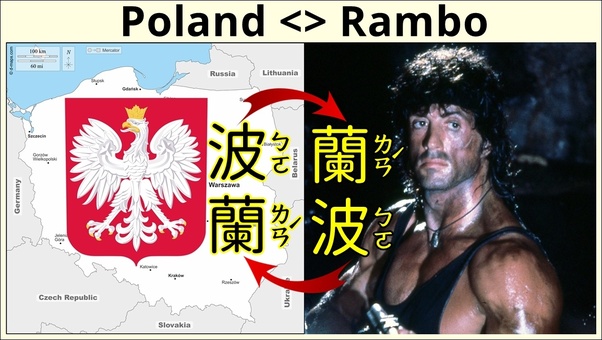
Why does “Poland” in Chinese (bōlán) mean “waves” (波) and “orchid” (兰)?

波蘭 (Traditional Chin. characters) / 波兰 (Simplified Chin. characters) bōlán / bolan is a syllable by syllable rendition of “Poland”. Nobody pays attention to the meaning of the individual characters: they are commonly used to stand for foreign syllables. Thus, 斯里蘭卡 Sīlǐlánkǎ / Syliilankaa stands for Sri Lanka, and 約翰·蘭波 Yuēhàn·Lán bō = John Rambo. (1) The “b” in bō / … Read more

How do you understand “奶奶” and “姥姥” in Chinese?

Here are two screenshots of 奶奶 and 姥姥 from the dictionary, Dictionary of Modern Chinese, or 现代汉语词典 in Chinese, published by the Commercial Press, or 商务印书馆 in Chinese. As you can see, 奶奶 could mean the paternal grandmother. It could also refer to elder women whose ages could be those of the grandmothers. In the … Read more

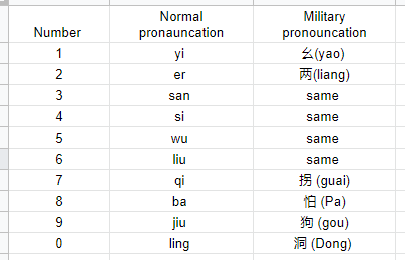
When giving your phone number in Mandarin, why do Chinese say yao instead of yi for the number 1?

“1“ being pronounced as “yao” (幺) is a military number variant. It became popular and used by civilians. It is similar to the military alphabet for English and other languages and served a similar function. when using military codes, people often choose a word to pronounce a letter, so there’s no misunderstanding when the connection … Read more

How hard is learning Chinese?

As an exchange student in Beijing, I’m currently preparing for HSK 4 of Chinese proficiency test. I was writing my practice exam when came across this question. What I want to say is LEARNING CHINESE is not HARD, but EXTREMELY HARD. Like learning other languages, you need to practice making sentences and telling stories in … Read more