In Mandarin, when is zero, one and two pronounced as “dòng”, “yaō”, “liǎng” instead of “yī”, “èr”, “sān”?

You kinda got it mixed up. “dòng”, “yaō”, “liǎng” mean 0, 1 and 2, however “yī”, “èr”, “sān” actually stands for 1, 2, and 3. “dòng”, “yaō”, “liǎng” are special pronunciation in Chinese systems such as the Chinese military, police, firefighting, railway, and aviation. They use the radio communication numeric pronunciation avoid confusion and improve clarity, … Read more

Are new Chinese characters still being invented?

Inventing new characters seems to have been still practiced quite commonly through the 20th century. For instance, the character “熵” means entropy, and was coined by a Chinese physicist Húgāngfù in 1923. In Japan, we simply use the transliteration “エントロピー(pronounced entoropi-)” for the word, but I think it’s way cooler to write with one character. … Read more

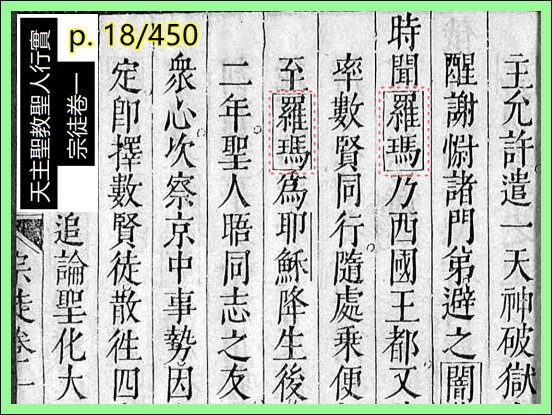
Why is the Chinese word for Rome 罗马 instead of 肉马?

History* provides three reasons. Jesuit priests were the first to introduce the history of Rome and the Roman Catholic church to China, so the word 羅馬 (written 羅瑪) was probably introduced by Matteo Ricci and his Jesuit colleagues: Matteo Ricci – Wikipedia (1) Latin/Italian Pronunciation: Standard Mandarin’s r- and -ou sound quite different from the Italian or Latin forms of r- or -o (to put … Read more

How do Mandarin speakers express concepts like “one in a million” using “wan” (万), and what cultural meanings do these expressions carry?

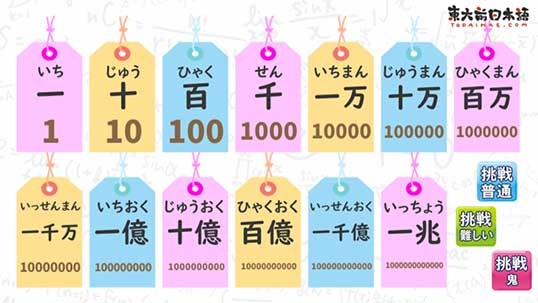
Chinese uses a decimal system. The image below is something I randomly found on Google, from a Japanese website, but that’s fine—it’s almost identical to Chinese. I’m directly referencing this image. However, there’s one difference: the character “兆” (zhào) in Chinese culture can mean 10^6, 10^12, or 10^16, depending on the context. In modern mainland … Read more

‌Why does the hanzi for “autumn” (秋) contain the radicals for “grain stalk” (禾) and “fire” (火)?

The first character for autumn represents a cricket, which was carved on the back armor of ancient turtles and the shoulder blades of cows for divination. The second one was written on bronze ware. The third one was written in a scroll made with silk production in the state of Chu. To the left of … Read more

How can one differentiate between “下次見 (xià cì jiàn)” and “下次見 (xiàcìjiàn)”?

Context is needed for differentiation. There is no difference between “下次見“ and ”下次見“ unless you say it out。If you space the three words (spoken words) evenly as in (xia⁴ci⁴jian⁴) it means “see you next time”, 見 is see “下次” is next time. 下 alone means “down” or a command for action or to execute an … Read more

What is the meaning of the title “ 文魁” and how did one obtain it in ancient China?

Well, this title wenkui, or 文魁 in Chinese, was conferred on people who passed tests in the Provincial Examination and ranked the 7th or below it. Provincial Examination, or 乡试 in Chinese, belonged to Imperial Examination System. This title 文魁 was mentioned in a book 清代科举考试述录及有关著作, which could be translated into English as Narration and … Read more

Do Chinese characters look like what they mean?

Eh… no, not really. At least not anymore lol. Modern Chinese characters are not particularly effective at conveying meaning through visual representation, but ancient Chinese characters more closely resembled what they meant, with this resemblance becoming stronger the further back you go. Writing was independently invented only three to four times in human history: in … Read more